


Imagine sinking your toes into warm sand and hearing the gentle lapping of waves on the shore. For many, a day at the beach is a simple summer pleasure. But for individuals who are blind or visually impaired, this experience can be filled with challenges. Navigational difficulties, unfamiliar surroundings, and a lack of accessible information can turn a relaxing day into a stressful one. However, a pioneering project in Italy is changing this narrative. The innovative blind beach Italy Marilena Carulli initiative represents a significant step forward in making natural wonders accessible to everyone, regardless of their physical abilities. It’s a story of compassion, innovation, and the fundamental belief that everyone deserves to enjoy the beauty of the sea.
This project is more than just adding a ramp to the sand; it is a complete rethinking of the beach experience from the perspective of a visually impaired person. Spearheaded by passionate advocates, it has created a space where safety, independence, and enjoyment are paramount. We will explore the details of this incredible initiative, discover the people behind it, and understand its profound impact on inclusive tourism.
Key Takeaways
- The blind beach in Italy is a specialized tourist destination designed for visually impaired individuals.
- Marilena Carulli is a key figure associated with the advocacy and development of this inclusive project.
- Features include tactile pathways, audible signals, and trained support staff to ensure a safe and independent experience.
- The initiative promotes a broader conversation about accessibility in public spaces and the tourism industry.
- This model serves as an inspiration for other locations worldwide to adopt similar inclusive practices.
What is the Blind Beach in Italy?
The “Blind Beach” is not one single location but a concept brought to life in various parts of Italy. The most prominent example is found in the Puglia region, a place known for its stunning coastlines. This project outfits a section of a public beach with advanced technology and thoughtful infrastructure specifically designed to assist blind and visually impaired visitors. The goal is to provide a safe and autonomous environment where they can navigate the area, swim, and relax with confidence.
This initiative transforms a standard beach into a multisensory landscape. Instead of relying solely on sight, visitors can use their other senses to understand and move through the space. From the moment they arrive, a network of aids is available to guide them. The project recognized that true accessibility means empowering individuals. It’s not about having someone lead you everywhere, but about having the tools to explore independently and safely. This vision has turned a simple stretch of sand into a beacon of hope and a model for what inclusive design can achieve. The success of the blind beach Italy Marilena Carulli project is a testament to what is possible when communities prioritize accessibility.
The Visionary Behind the Project: Marilena Carulli
Every great movement has a champion, and for this accessible beach initiative, Marilena Carulli has been a driving force. As the president of the Unione Italiana dei Ciechi e degli Ipovedenti (Italian Union of the Blind and Partially Sighted) in Bari, she has been a tireless advocate for the rights and inclusion of visually impaired individuals. Her work was instrumental in bringing the concept of a fully accessible beach to fruition. Carulli and her organization collaborated with local authorities and businesses to secure funding, design the layout, and ensure the project met the real-world needs of its intended users.
Her involvement went far beyond administrative duties. She brought a personal passion and deep understanding of the barriers faced by the visually impaired community. She championed the idea that accessibility is not a luxury but a fundamental right. Carulli’s leadership helped transform a brilliant idea into a tangible reality, creating a space that offers not just recreation, but dignity and independence. The blind beach Italy Marilena Carulli project stands as a powerful part of her legacy, inspiring others to take action and build a more inclusive world. Her work is a prime example of effective community leadership, which you can learn more about through resources like those from the U.S. Department of Health & Human Services that highlight community mobilization.
The Role of Advocacy in Creating Change
Advocacy was the cornerstone of this project’s success. It began with identifying a clear need within the community and articulating it to those in power. Carulli and her team presented a compelling case, demonstrating how an accessible beach would not only serve the local visually impaired population but also attract tourists, boosting the local economy. They organized meetings, launched awareness campaigns, and built a coalition of supporters. This persistent effort was crucial in overcoming bureaucratic hurdles and securing the necessary resources. It’s a powerful reminder that significant change often starts with a small group of dedicated people speaking up for what is right.
Innovative Features of the Accessible Beach
The blind beach is equipped with a range of groundbreaking features that work together to create a seamless experience. These are not just token additions but a comprehensive system designed for maximum independence.
Tactile Pathways and Maps
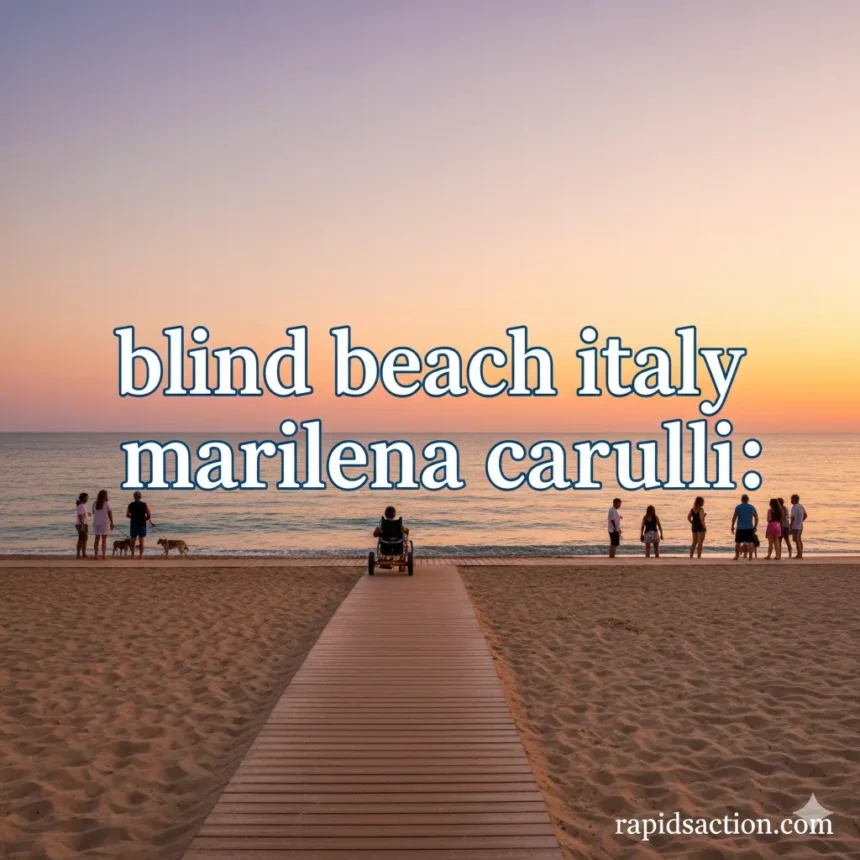
The most visible feature is the network of tactile pathways. These specialized walkways are laid out on the sand, leading from the entrance to key areas like the shoreline, restrooms, and refreshment stands. The texture of the path allows a person using a cane to follow it easily. At key intersections, tactile maps provide a braille and raised-relief overview of the beach layout, helping visitors orient themselves and plan their movements.
Audible Lifesaving System
Safety in the water is a primary concern. To address this, the beach uses a sophisticated audible system. Buoys equipped with speakers are placed in the water, emitting distinct sounds that help swimmers understand their position relative to the shore. This auditory guidance allows them to swim freely within a safe zone without fear of disorientation. It’s a simple yet highly effective solution that replaces visual cues with auditory ones.
Specialized Equipment and Staff
The beach offers specially designed lounge chairs and umbrellas placed along the tactile paths for easy access. Furthermore, the staff and lifeguards receive specific training on how to assist visually impaired visitors respectfully and effectively. They are available to provide help when requested but are trained to encourage independence first. This combination of technology, infrastructure, and human support creates a truly welcoming atmosphere.
A Multisensory Experience
What makes this project unique is its focus on a complete sensory experience.
- Touch: The tactile paths, the texture of the sand, the warmth of the sun.
- Sound: The audible buoys, the call of the seagulls, the sound of the waves.
- Smell: The fresh, salty air of the sea.
- Taste: The flavor of a cool drink from the easily accessible snack bar.
By designing for all senses, the beach becomes a rich and engaging environment for everyone, not just those who can see it.
The Impact on Tourism and Community
The introduction of the blind beach has had a profoundly positive impact that extends beyond its immediate users. It has positioned the Puglia region as a leader in accessible tourism, attracting visitors from across Italy and Europe. This influx of tourists benefits local hotels, restaurants, and shops, demonstrating that investing in accessibility is also good for business. The initiative has enhanced the community’s reputation, marking it as a progressive and compassionate place to live and visit.
More importantly, it has fostered a greater sense of inclusion within the community. When public spaces are designed for everyone, it sends a powerful message that all members of society are valued. The beach has become a place where people with and without disabilities can interact, breaking down social barriers and promoting mutual understanding. The project has also sparked a wider conversation about accessibility in other public areas, from parks to museums. This ripple effect is perhaps its most significant achievement, driving a cultural shift towards universal design. To learn more about accessible design principles, the National Institute of Building Sciences offers comprehensive guidelines.
Comparing Traditional and Accessible Beaches
Feature | Traditional Beach | Accessible Blind Beach |
|---|---|---|
Navigation | Relies on visual signs and landmarks. | Tactile pathways and maps for guidance. |
Water Safety | Lifeguards use visual signals (flags, gestures). | Audible buoys and specialized lifeguard training. |
Independence | Challenging for visually impaired individuals. | Designed for maximum autonomy and confidence. |
Infrastructure | Standard amenities, often with physical barriers. | Ramps, accessible restrooms, and organized layouts. |
Staff Training | General first aid and rescue training. | Specialized training to assist patrons with disabilities. |
The Future of Accessible Tourism in Italy and Beyond
The success of the blind beach Italy Marilena Carulli project provides a robust blueprint for other communities to follow. The model is scalable and adaptable to different coastal environments. The combination of low-tech solutions like tactile paths and high-tech aids like audible buoys shows that accessibility can be achieved through a variety of means. The key is a commitment from local governments and community leaders to prioritize inclusion. As awareness grows, we can expect to see more projects like this emerge around the world.
The future of accessible tourism lies in integrating universal design principles from the very beginning of any new development. Rather than retrofitting existing spaces, new destinations should be built with everyone in mind. This not only makes good ethical sense but also opens up a massive, underserved market of travelers with disabilities and their families. As our global population ages, the need for accessible infrastructure will only become more critical. This initiative is a shining example of how to meet that need with ingenuity and heart. For those looking to implement similar projects, collaborating with a team that understands process and action, like rapidsaction.com, can help turn vision into reality.
Conclusion
The blind beach Italy Marilena Carulli initiative is far more than a simple beach adaptation. It is a powerful symbol of progress, demonstrating that with thoughtful design and compassionate leadership, we can dismantle barriers and create a world that is open to everyone. It has provided a safe and liberating space for countless individuals to experience the simple joy of a day by the sea, many for the first time. This project challenges us all to look at our own communities and ask: how can we be more inclusive? It proves that accessibility is not an insurmountable obstacle but an opportunity for innovation, connection, and shared humanity. The waves on Puglia’s shore now carry a message of hope, echoing far beyond the Italian coast.
Frequently Asked Questions (FAQ)
1. Where is the main blind beach in Italy located?
The most well-known accessible beach for the blind is located in the Puglia region of Southern Italy, though the concept is being adopted in other coastal areas as well.
2. Who is Marilena Carulli?
Marilena Carulli is the president of the Bari chapter of the Italian Union of the Blind and Partially Sighted. She was a key advocate and leader in the development of the blind beach Italy Marilena Carulli project.
3. What makes the beach accessible for the blind?
It features a system of tactile pathways, braille maps, audible buoys for safe swimming, specially trained staff, and an overall design that allows for independent navigation and enjoyment.
4. Is the beach only for visually impaired people?
No, the beach is a public space open to everyone. The accessibility features are integrated into the environment, allowing people with and without disabilities to enjoy the beach together.
5. How can other communities create a similar beach?
Communities can start by partnering with local disability advocacy groups, securing funding from public and private sources, and studying the model used in Puglia. The focus should be on creating a comprehensive system that promotes safety and independence.